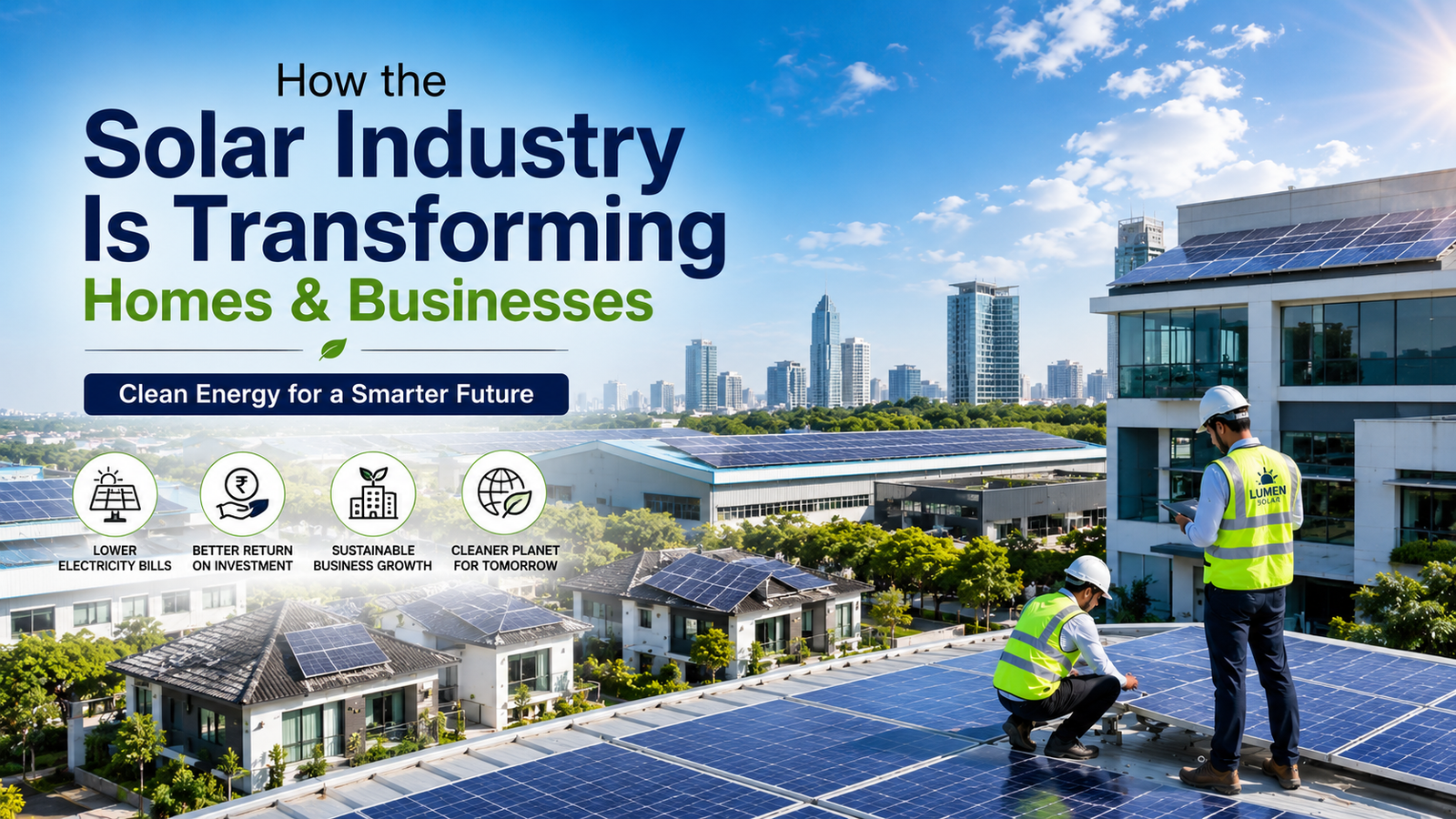
How the Solar Industry Is Transforming Homes & Businesses
The solar industry has become one of the fastest-growing sectors across the world. Rising electricity prices, increasing awareness about renewable energy, and government support for clean power solutions are encouraging people to adopt solar technology. Today, the solar industry is changing how homes and businesses generate and consume electricity.
In India, the demand for rooftop solar systems has increased rapidly over the past few years. Cities like Nagpur, which receive abundant sunlight, are seeing more residential and commercial properties installing solar panels. The growth of the solar industry is not only helping reduce electricity expenses but also creating a cleaner and more sustainable future.
This guide explains how the solar industry is transforming homes and businesses, the advantages of solar energy, and why renewable power has become an important investment.
Growth of the Solar Industry
The solar industry has expanded significantly because of technological advancements and reduced installation costs. Modern solar panels are more efficient and durable compared to older systems. Governments are also introducing subsidies and renewable energy programs to encourage solar adoption.
India has become one of the leading countries investing in renewable energy. Rooftop solar systems are now common on homes, offices, factories, schools, and commercial buildings. With growing awareness and financial benefits, the solar industry continues to attract homeowners and businesses looking for long-term savings.
How the Solar Industry Is Transforming Residential Homes
The solar industry is making a major impact on residential properties by helping homeowners reduce electricity bills and become more energy independent.
Lower Electricity Bills
One of the biggest benefits of solar energy is lower monthly electricity expenses. Solar panels generate electricity from sunlight, reducing dependence on traditional power supply.
Depending on system size and energy consumption, households can save a significant amount every month.
Long-Term Savings
Although installing solar panels requires an initial investment, the savings generated over time usually exceed the installation cost. Most systems continue producing electricity efficiently for more than 25 years.
After recovering the initial investment, homeowners can enjoy almost free electricity for many years.
Increased Property Value
Homes equipped with rooftop solar systems often have higher resale value because buyers appreciate reduced electricity costs and sustainable energy solutions.
Energy Independence
The solar industry is helping families generate their own electricity instead of relying entirely on conventional power sources. This provides greater control over energy usage and long-term financial stability.
How the Solar Industry Is Helping Businesses
The solar industry is also transforming commercial and industrial sectors. Businesses consume large amounts of electricity, making solar power a practical solution for reducing operating costs.
Reduced Operational Expenses
Commercial solar systems help businesses generate their own electricity, significantly lowering monthly energy bills.
Faster Return on Investment
Businesses usually recover solar installation costs within a few years because of higher electricity consumption and greater energy savings.
Sustainable Brand Image
Modern consumers prefer environmentally responsible companies. Businesses using solar energy demonstrate commitment to sustainability and clean energy practices.
Protection From Rising Electricity Prices
Electricity tariffs continue to rise every year. Solar energy helps businesses reduce the impact of increasing energy costs.
Government Support for the Solar Industry
Government initiatives have played a major role in expanding the solar industry across India.
Solar Subsidies
Residential rooftop solar users can receive government subsidies that reduce installation costs and make solar systems more affordable.
Net Metering Benefits
Net metering allows users to export excess electricity generated by solar panels back to the power grid. In return, they receive credits that further reduce electricity bills.
Renewable Energy Goals
Governments are investing heavily in renewable energy infrastructure to reduce dependence on fossil fuels and encourage clean energy production.
Environmental Benefits of the Solar Industry
The solar industry contributes significantly to environmental sustainability and clean energy generation.
Reduced Carbon Emissions
Solar systems generate electricity without producing harmful greenhouse gases, helping reduce pollution and environmental damage.
Cleaner Energy Production
Unlike traditional power plants, solar panels use sunlight to produce electricity. This renewable energy source is sustainable and environmentally friendly.
Better Future for Upcoming Generations
The shift toward renewable energy helps create a cleaner and healthier environment for future generations.
Technological Advancements in the Solar Industry
Continuous innovation is making the solar industry more efficient and accessible.
High-Efficiency Solar Panels
Modern solar panels generate more electricity while using less rooftop space.
Battery Storage Systems
Battery technology allows users to store excess solar power generated during the day for use at night or during power outages.
Smart Energy Monitoring
Advanced monitoring systems help homeowners and businesses track electricity production and system performance in real time.
These improvements are helping solar technology become more practical for daily use.
Employment Opportunities in the Solar Industry
The growth of the solar industry is also creating new job opportunities. Engineers, electricians, technicians, installers, sales professionals, and maintenance experts are all in demand.
As renewable energy adoption increases, the need for skilled professionals in the solar sector is expected to grow rapidly.
Challenges Facing the Solar Industry
Despite its rapid growth, the solar industry still faces some challenges.
Initial Installation Cost
The upfront investment for solar systems may still be high for some homeowners, although subsidies help reduce expenses.
Lack of Awareness
Many people are still unaware of the long-term financial benefits of solar energy.
Space Limitations
Some buildings may not have enough rooftop space for large solar installations.
However, continuous technological improvements and government support are helping overcome these challenges.
Future of the Solar Industry
The future of the solar industry looks highly promising. As technology improves and installation costs continue to decline, more homes and businesses are expected to switch to solar power.
Innovations such as battery storage systems, electric vehicle charging, and smart energy management will further strengthen renewable energy adoption. The solar industry will continue playing an important role in reducing dependence on conventional energy sources.
The solar industry is transforming the way homes and businesses use electricity. Solar technology provides cleaner, more affordable, and sustainable energy solutions while helping reduce electricity bills and environmental impact.
For homeowners, solar energy offers long-term savings, energy independence, and higher property value. For businesses, it reduces operating costs and protects against rising electricity prices.
As awareness continues to grow and technology becomes more advanced, the solar industry will keep expanding across India and around the world. Investing in solar energy today is not only a smart financial decision but also a step toward a cleaner and greener future.

Leave a comment