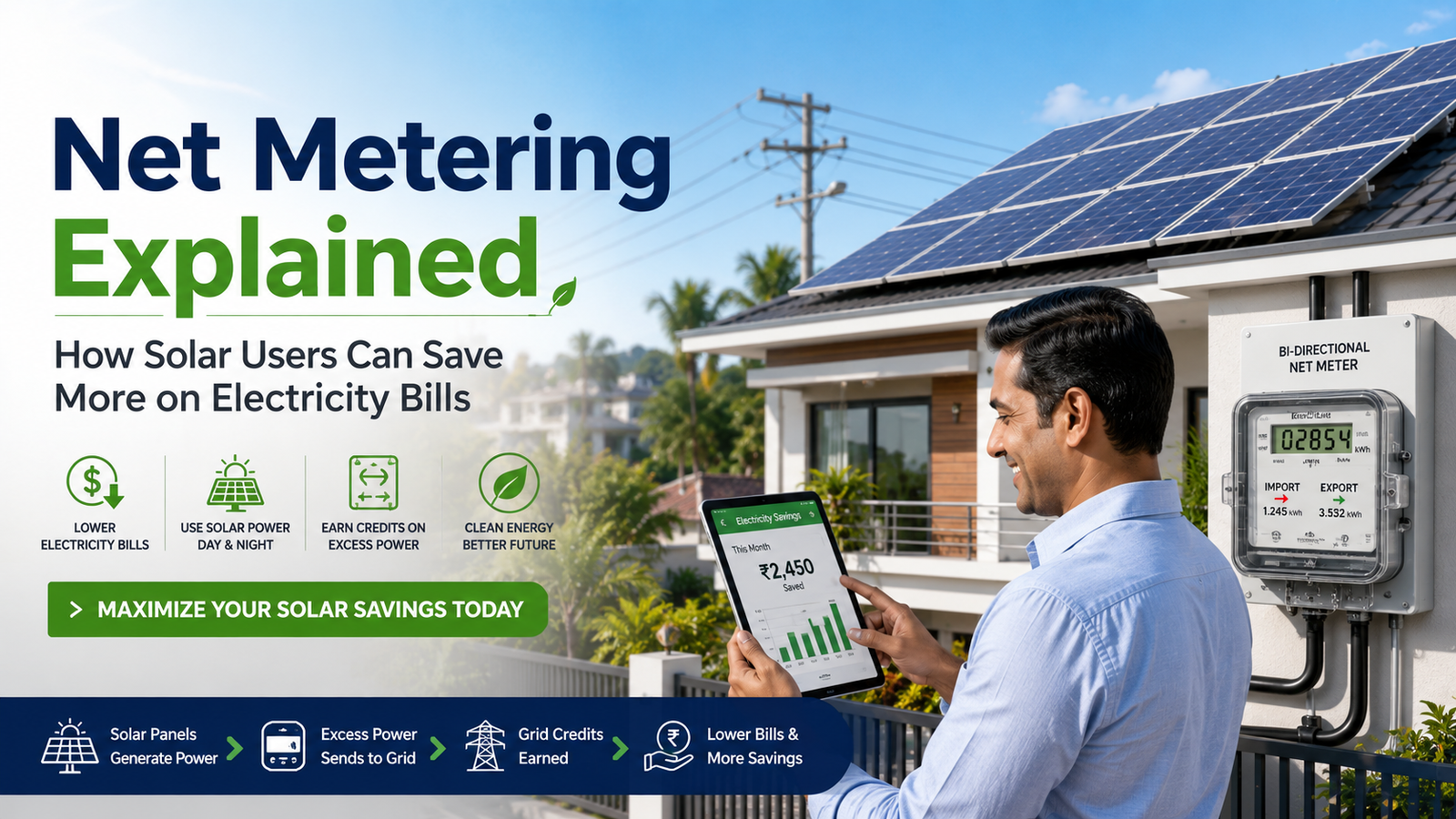
Net Metering Explained: How Solar Users Can Save More on Electricity Bills
As solar energy adoption continues to grow across India, homeowners and businesses are looking for ways to maximize the benefits of their solar systems. One of the most important advantages available to solar users is net metering. This system allows solar panel owners to earn credits for excess electricity generated and supplied back to the grid, helping them reduce electricity bills even further.
Despite its popularity, many people are still unaware of how net metering works and how it can increase savings from rooftop solar installations. Understanding this concept can help homeowners and businesses make better decisions when investing in solar energy.
In this guide, we explain n metering, its benefits, how it works, and why it is essential for anyone planning to install a rooftop solar system.
What Is Net Metering?
Metering is a billing mechanism that allows solar energy users to send surplus electricity generated by their solar panels back to the utility grid. In exchange, the electricity provider grants energy credits that can be applied to reduce future electricity bills.
During the day, solar panels often generate more electricity than a home or business requires. Instead of letting this extra energy go to waste, it is exported to the grid through a bidirectional meter. When electricity consumption exceeds solar production, especially at night, users can draw power from the grid while utilizing the credits earned earlier.
This system helps maximize the value of solar energy and significantly reduces electricity costs.
How Does Net Metering Work?
Net metering operates through a special meter known as a net meter or bidirectional meter. Unlike traditional electricity meters, it records both imported and exported electricity.
During Daytime
When sunlight is available, solar panels generate electricity.
- The electricity produced is first used by the property.
- Any excess electricity generated is fed back into the utility grid.
- The exported power earns credits.
During Nighttime
Solar panels do not generate electricity at night.
- Electricity is drawn from the utility grid.
- Previously earned credits help offset consumption.
Monthly Billing
At the end of the billing cycle, the electricity provider calculates the difference between imported and exported units.
This process allows solar users to pay only for their net electricity consumption.
Why Net Metering Is Important for Solar Users
Metering is one of the key reasons rooftop solar systems have become financially attractive.
Without metering, excess electricity generated during the day would not provide any financial benefit. By exporting surplus power and earning credits, solar users can maximize system efficiency and increase overall savings.
This makes rooftop solar installations more cost-effective and improves return on investment.
Major Benefits of Net Metering
Lower Electricity Bills
One of the biggest advantages of metering is reduced electricity expenses.
When excess solar power is exported to the grid, users receive credits that reduce their monthly electricity bills. In some cases, these savings can significantly lower overall energy costs.
Better Return on Investment
Solar systems require an initial investment. metering helps recover that investment faster by increasing the value of every unit of electricity generated.
The more efficiently a system produces energy, the greater the potential savings.
Maximum Utilization of Solar Power
Without metering, excess electricity may remain unused. metering ensures that every unit of power generated contributes to financial savings.
Reduced Dependence on Grid Electricity
Solar users can generate their own electricity and reduce reliance on conventional power sources.
This helps protect households and businesses from rising electricity prices.
Environmentally Friendly Solution
Net metering encourages greater adoption of renewable energy. Increased solar usage reduces dependence on fossil fuels and contributes to a cleaner environment.
Who Can Benefit From Net Metering?
Net metering is suitable for a wide range of solar users.
Residential Homeowners
Families with rooftop solar systems can use net metering to lower monthly electricity expenses and maximize solar savings.
Commercial Buildings
Offices, retail outlets, hotels, and hospitals often consume large amounts of electricity. Net metering helps commercial users reduce operating costs.
Industrial Facilities
Factories and manufacturing units can benefit significantly by offsetting electricity consumption through solar energy generation.
Net Metering and Rooftop Solar Systems
Rooftop solar systems work especially well with metering because solar energy production often exceeds daytime consumption.
For example:
- A home may generate more electricity during the afternoon than it uses.
- The excess power is exported to the grid.
- Credits are earned.
- Those credits are used when electricity is required at night.
This cycle improves energy efficiency and reduces electricity bills.
Requirements for Net Metering
Before applying for net metering, certain requirements must be met.
Solar System Installation
The property must have a properly installed rooftop solar system.
Utility Approval
The local electricity distribution company must approve the net metering connection.
Bidirectional Meter
A bidirectional net meter must be installed to accurately record both electricity imported from and exported to the grid.
Compliance With Regulations
The solar installation must comply with all applicable local utility requirements, government regulations, and safety standards.
Many solar installation companies assist customers with these procedures.
Net Metering in India
India has actively promoted net metering as part of its renewable energy initiatives. Various states have introduced policies that encourage solar adoption through net metering benefits.
These policies help:
- Increase rooftop solar installations
- Reduce pressure on conventional power generation
- Support renewable energy goals
- Lower electricity costs for consumers
As solar adoption continues to grow, net metering remains one of the most valuable incentives available to solar users.
Common Myths About Net Metering
Myth 1: Net Metering Eliminates Electricity Bills Completely
While net metering can significantly reduce bills, some charges may still apply depending on electricity usage and local regulations.
Myth 2: Excess Electricity Is Wasted
In reality, surplus energy is sent back to the grid and converted into bill credits.
Myth 3: Net Metering Is Only for Large Solar Systems
Even small residential rooftop systems can benefit from net metering.
Myth 4: The Process Is Complicated
Most solar installation companies assist with applications, approvals, and documentation, making the process straightforward.
How to Maximize Savings With Net Metering
To get the best results from net metering:
Choose the Right Solar System Size
A properly sized system generates enough electricity to meet consumption needs while maximizing exports.
Use Quality Solar Panels
High-efficiency solar panels improve energy production.
Monitor Energy Usage
Tracking consumption helps optimize savings.
Maintain the Solar System
Regular cleaning and maintenance ensure consistent performance.
The Future of Net Metering
As renewable energy adoption continues to expand, net metering is expected to play an even greater role in supporting solar users.
Advancements in smart meters, battery storage systems, and energy management technology will further improve the efficiency of solar power systems.
The combination of rooftop solar and net metering will continue helping homeowners and businesses reduce electricity expenses while supporting sustainable energy generation.
Net metering is one of the most valuable benefits available to solar users. It allows homeowners and businesses to earn credits for surplus electricity generated by their solar systems, resulting in lower electricity bills and greater financial savings.
By maximizing the use of solar energy, net metering improves return on investment, encourages renewable energy adoption, and reduces dependence on traditional power sources.
For anyone planning to install a rooftop solar system, understanding net metering is essential. It not only increases savings but also helps make solar energy a smarter and more rewarding investment for the future.


Leave a comment