Can Solar Panels Be Installed During Monsoon? Everything You Need to Know
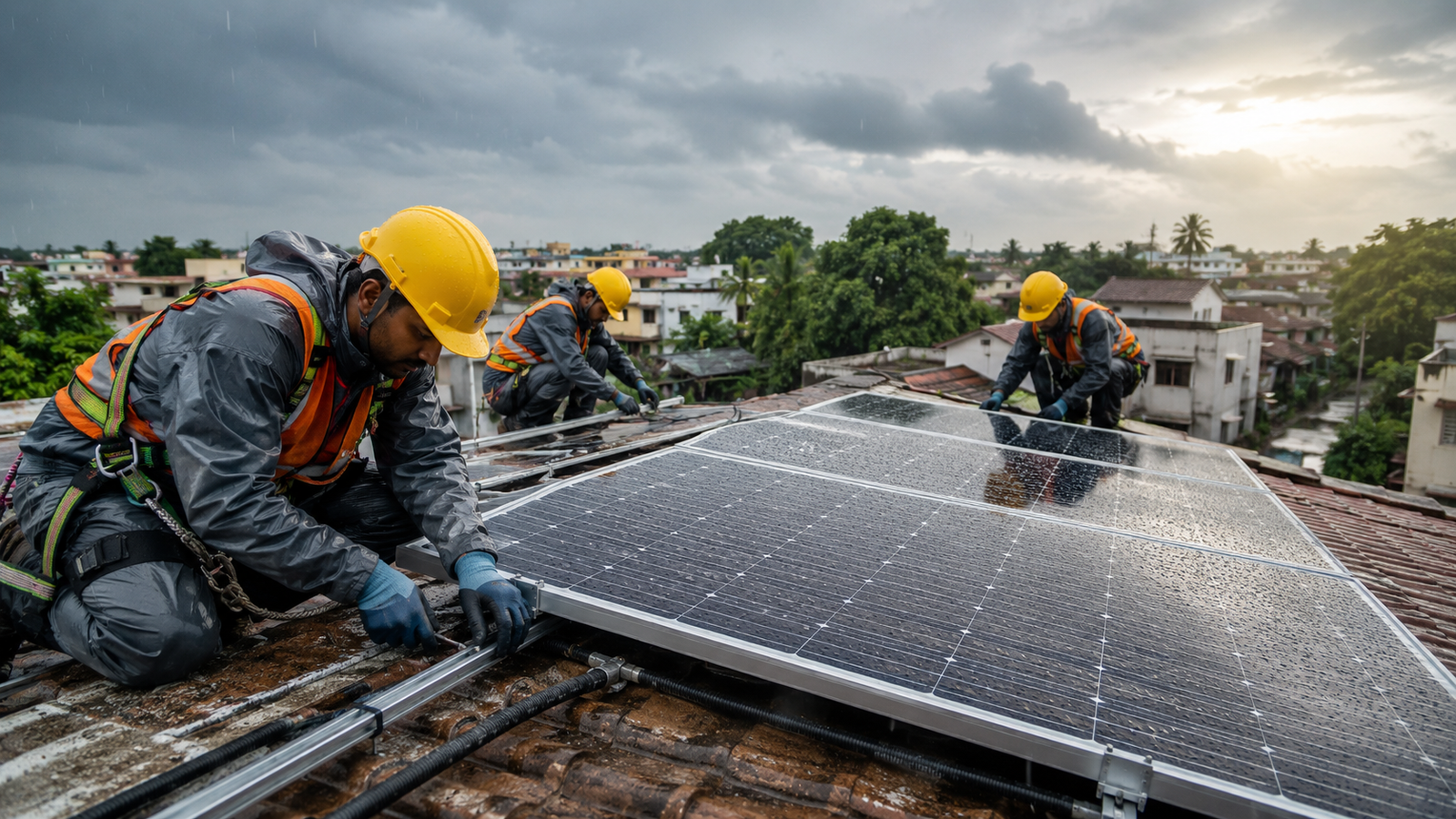
Thinking about switching to solar energy but worried about the rainy season? You’re not alone. One of the most common questions homeowners ask is, “Can solar panels be installed during monsoon?“ The answer is yes—rooftop solar systems can be installed during the monsoon when weather conditions are suitable and the work is handled by trained professionals.
Many people believe they must wait until summer to install a rooftop solar system. While bright sunny days are ideal for faster installation, monsoon doesn’t necessarily stop your solar journey. Professional solar companies carefully monitor weather forecasts and schedule rooftop work during dry periods. If heavy rain, lightning, or strong winds occur, installation is temporarily paused to ensure worker safety and maintain installation quality.
Modern solar systems are engineered to withstand harsh weather conditions, including heavy rainfall, humidity, and strong winds when installed correctly. In fact, installing your solar system during the rainy season means it will be fully operational and ready to generate maximum electricity as soon as clear skies return.
Understanding Solar Installation During the Rainy Season
The monsoon season presents unique challenges, but it doesn’t make solar installation impossible. Solar panels are designed for outdoor use and are manufactured to withstand years of exposure to rain, sunlight, dust, and changing temperatures. Government rooftop solar technical specifications also require weather-resistant components and appropriate enclosure protection ratings for outdoor electrical equipment.
Professional installers follow a structured process during monsoon projects. They inspect the roof, assess weather conditions, install waterproof mounting structures, and seal every roof penetration carefully. If rainfall becomes heavy, work stops until conditions improve.
Rather than rushing the installation, experienced technicians prioritize quality over speed. This approach helps prevent roof leaks, improper wiring, or structural issues later. Choosing a certified installer becomes even more important during the rainy season because the quality of workmanship determines how well your system performs for the next 25 years.
Is It Safe to Install Solar Panels During Monsoon?
Weather Conditions Matter
Safety is always the highest priority. Installation should never be carried out during thunderstorms, lightning, heavy rainfall, or high winds. Wet rooftops become slippery, increasing the risk of accidents.
Professional installers constantly monitor weather forecasts before scheduling rooftop work. If unfavorable weather develops, they simply postpone the installation until conditions become safe.
Safety Measures Taken by Installers
Reliable solar companies follow strict safety procedures, including:
- Using certified safety harnesses and protective equipment.
- Installing waterproof cable conduits and junction boxes.
- Applying high-quality roof sealants.
- Testing electrical connections before commissioning.
- Conducting final inspections after installation.
Recent industry reports have highlighted that poor-quality mounting structures and improper installation—not rain itself—are the biggest causes of rooftop solar failures during storms. Choosing a reputable installer with engineered mounting systems significantly improves long-term safety and durability.
Benefits of Installing Solar Panels During Monsoon
Many homeowners are surprised to learn that installing solar during the rainy season offers several practical advantages.
1. Faster Project Scheduling
Summer is often the busiest season for solar companies. During monsoon, installers may have greater availability, reducing waiting times for site surveys and installation appointments.
2. Ready Before Peak Sunshine
Once the rainy season ends, your solar system is already installed and immediately begins generating maximum electricity during clear, sunny months.
3. Natural Cleaning
Rain naturally washes away dust and dirt from solar panels. Government and energy guidance notes that panels installed on a suitable slope often self-clean during rainfall, although professional maintenance may still be needed in dusty environments.
4. Immediate Electricity Savings
Instead of waiting several months for summer, installing during monsoon allows you to begin producing electricity as soon as weather improves.
Challenges of Installing Solar Panels During Monsoon
Although installation is possible, homeowners should understand a few limitations.
Reduced Working Hours
Heavy rain may interrupt installation, causing projects to take slightly longer than usual.
Roof Safety
Wet roofs require additional precautions. Professional installation teams prioritize safety and may reschedule the work until weather conditions improve.
Cloudy Weather
Solar panels continue generating electricity during cloudy days, but production decreases because less sunlight reaches the photovoltaic cells. Once sunshine returns, performance returns to normal.
How Professional Installers Ensure a Reliable Installation
The quality of installation matters more than the season itself.
Experienced installers perform:
| Installation Step | Purpose |
| Roof inspection | Ensures structural safety |
| Waterproof mounting | Prevents roof leakage |
| Weather-resistant wiring | Protects electrical components |
| Performance testing | Verifies system output |
| Final inspection | Confirms long-term reliability |
Professionally installed systems use corrosion-resistant mounting structures, weatherproof connectors, and properly sealed cable entries designed for outdoor environments.
How Well Do Solar Panels Perform During Monsoon?
One of the biggest misconceptions is that solar panels stop working when it’s cloudy.
The reality is different.
Solar panels generate electricity from daylight—not just direct sunlight. During overcast conditions, they continue producing power using diffuse sunlight, although output is lower than on bright sunny days.
Rain also helps maintain panel cleanliness by removing accumulated dust and pollutants. Cleaner panels absorb sunlight more efficiently once skies clear.
For homeowners with grid-connected systems, reduced daytime generation during monsoon can often be balanced by electricity imported from the grid, while sunny periods help offset usage over time.
Tips for Homeowners Planning Solar Installation During Monsoon
To ensure a smooth project:
- Choose a certified and experienced solar installer.
- Verify that weatherproof mounting hardware is used.
- Confirm waterproof roof sealing methods.
- Ensure surge protection is included if recommended for your location.
- Schedule installation around favorable weather forecasts.
- Request a post-installation inspection after the rainy season.
These simple steps significantly improve the reliability and lifespan of your rooftop solar system.
Common Myths About Solar Panels During Rain
Myth 1: Solar Panels Don’t Work During Rain
False. They continue generating electricity, although at reduced output due to lower sunlight levels.
Myth 2: Rain Damages Solar Panels
False. Modern solar panels are built to withstand rain, humidity, and outdoor conditions for decades when installed correctly.
Myth 3: Installation Should Never Be Done During Monsoon
False. Installation is possible during safe weather windows and is commonly performed by experienced professionals.
Myth 4: Water Causes Roof Leakage
Not if the installation is completed properly using quality flashing, sealants, and waterproof mounting techniques.
Yes, solar panels can absolutely be installed during the monsoon. The key factor is not the season but the quality of the installation and adherence to safety practices. Professional solar companies schedule work during suitable weather conditions, use weather-resistant materials, and follow strict installation standards to ensure long-term performance.
While heavy rain may temporarily delay rooftop work, a properly installed solar system is built to withstand challenging weather and continue delivering reliable energy for decades. If you’re planning to switch to solar, there’s no need to wait for summer. With the right installer, your system can be safely installed during the monsoon and be ready to maximize electricity generation as soon as the skies clear.
Frequently Asked Questions
1. Can solar panels be installed during heavy rain?
No. Installation should be postponed during heavy rain, thunderstorms, or strong winds for safety reasons.
2. Do solar panels work on cloudy days?
Yes. They generate electricity from diffuse sunlight, although output is lower than on bright sunny days.
3. Will rain damage my rooftop solar system?
No. Quality solar panels and professionally installed systems are designed to withstand rain and outdoor weather conditions.
4. Is monsoon a good time to install solar panels?
Yes. It can offer faster scheduling, and your system will be ready before the high-sunlight season begins.
5. How can I ensure a safe monsoon installation?
Hire a certified installer, insist on weatherproof components, and make sure installation is performed only during safe weather conditions.
Leave a comment