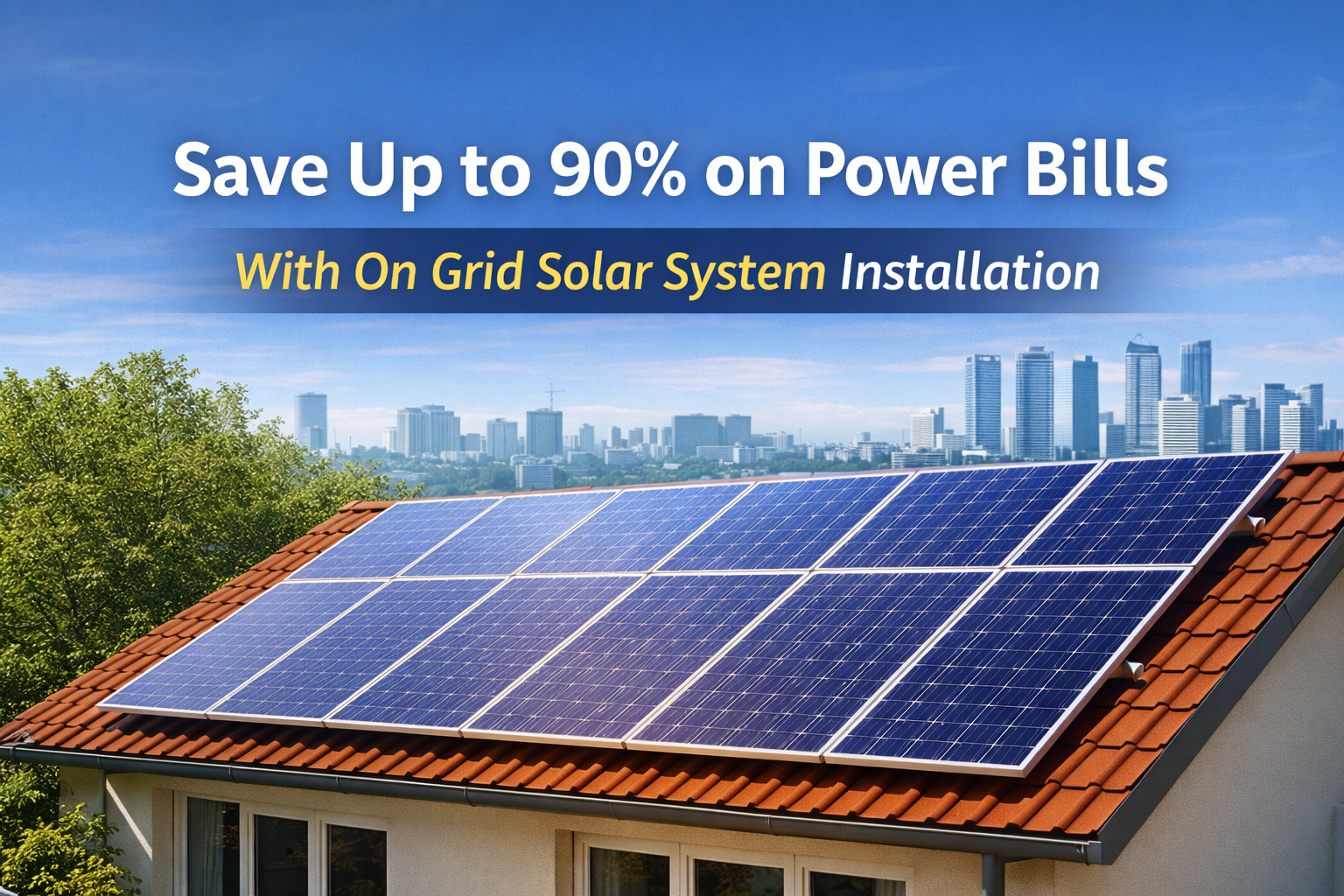
Save Up to 90% on Power Bills with On Grid Solar System Installation
Electricity bills are rising every year, and for homeowners and businesses alike, this has become a major concern. The good news? You don’t have to depend entirely on expensive grid power anymore. With an On Grid Solar System, you can generate your own electricity, significantly cut monthly bills, and enjoy clean energy for decades.
In this blog, we’ll explain how an on grid solar system works, why it’s the most popular solar solution today, how much you can save, and whether it’s the right choice for your home or business.
What Is an On Grid Solar System?
An Solar System (also known as a grid-connected solar system) is directly connected to the main electricity grid. It generates power during the day using solar panels and supplies electricity to your home or business in real time.
If your solar system produces more electricity than you need, the excess power is sent back to the grid. If your consumption is higher than solar generation, you automatically draw power from the grid. This seamless balance makes on grid systems highly efficient and cost-effective.
How an On Grid Solar System Works
An solar system operates through a simple and efficient process:
- Solar panels capture sunlight and generate electricity
- The inverter converts this power into usable AC electricity
- Your appliances use solar power first
- Extra electricity is exported to the grid through net metering
- You earn credits for the exported power
- At night or during low sunlight, grid power is used
This smart interaction between solar and grid power is what makes the on grid solar system so popular.
Why On Grid Solar System Is the Most Preferred Choice
The solar system is the most commonly installed solar solution today—and for good reasons.
1. Massive Reduction in Electricity Bills
An on grid solar system can reduce your electricity bills by 70% to 90%, depending on system size and consumption.
2. Lower Installation Cost
Since there are no batteries involved, the upfront cost of an on grid solar system is much lower compared to off-grid or hybrid systems.
3. Net Metering Benefits
Net metering allows users to export excess electricity to the grid and earn credits, further reducing monthly bills.
4. Government Subsidy Support
Residential on grid solar systems are eligible for government subsidies, which significantly reduce installation costs.
5. Low Maintenance
With fewer components and no batteries, maintenance requirements are minimal.
How Much Can You Save with an On Grid Solar System?
Let’s look at a practical example.
Example: Residential Home
- Monthly electricity bill: ₹3,000
- On grid solar system size: 3 kW
- Monthly savings: ₹2,400–₹2,700
- Annual savings: ₹28,000–₹32,000
Over 25 years, savings can go well beyond ₹7–8 lakhs, making the on grid solar system one of the smartest financial investments.
Ideal Properties for On Grid Solar System Installation
An on grid solar system works best for:
- Homes with regular daytime electricity usage
- Apartments with individual meters
- Offices and commercial buildings
- Shops, hospitals, schools, and factories
- Locations with reliable grid power
If power cuts are rare in your area, an on grid solar system is usually the best option.
On Grid Solar System vs Other Solar Systems
On Grid Solar System
- Connected to grid
- No batteries
- Lower cost
- Net metering available
Off Grid Solar System
- Not connected to grid
- Uses batteries
- Higher cost
- Useful for frequent power cuts
Hybrid Solar System
- Grid + batteries
- Backup during outages
- Highest cost
For most urban homes and businesses, the Solar System offers the best balance of savings and affordability.
Cost of Installing an On Grid Solar System
The cost of an on grid solar system depends on system size, panel quality, inverter brand, and installation complexity.
Approximate Price Range (India)
| System Size | Suitable For | Approx. Cost (₹) |
| 1 kW | Small homes | ₹45,000 – ₹70,000 |
| 2 kW | 1–2 BHK | ₹85,000 – ₹1,30,000 |
| 3 kW | Medium homes | ₹1,30,000 – ₹1,80,000 |
| 5 kW | Large homes | ₹2,30,000 – ₹3,00,000 |
| 10 kW | Commercial use | ₹4,50,000 – ₹6,50,000 |
Subsidies can reduce this cost significantly for residential users.
Government Subsidy for On Grid Solar System
Under schemes like PM Surya Ghar Muft Bijli Yojana, homeowners installing an on grid solar system can receive subsidies such as:
- ₹30,000 for 1 kW
- ₹60,000 for 2 kW
- Up to ₹78,000 for 3 kW or more
Subsidies are applicable only for on grid residential solar systems, making them even more attractive.
Net Metering: The Key Advantage
Net metering is a major benefit of installing an on grid solar system.
- Excess electricity is sent to the grid
- Credits are added to your electricity bill
- Credits reduce future bills
This ensures that no solar power goes to waste and your savings increase every month.
Maintenance Requirements
An on grid solar system requires very little maintenance:
- Panel cleaning every 1–2 months
- Annual system inspection
- Occasional inverter check
Average annual maintenance cost is minimal, typically ₹1,500–₹5,000, depending on system size.
Common Myths About On Grid Solar System
Myth 1: Solar doesn’t work during cloudy days
Reality: Solar panels still generate electricity in diffused sunlight.
Myth 2: On grid solar doesn’t work at all during power cuts
Reality: It shuts down for safety reasons, but hybrid upgrades can solve this.
Myth 3: Solar installation is complicated
Reality: Professional installers handle everything, including approvals and net metering.
Is an On Grid Solar System Worth It?
Absolutely.
An on grid solar system offers:
- Long-term savings
- Fast return on investment (3–5 years)
- Environment-friendly energy
- Increased property value
- Protection from rising electricity prices
For homes and businesses with reliable grid power, it’s the most cost-effective solar solution available today.
Installing an Solar System is not just about saving on electricity bills—it’s about gaining control over your energy future. With the ability to save up to 90% on power bills, government subsidies, and low maintenance costs, on grid solar systems deliver unmatched value.
If you’re looking for a smart, sustainable, and financially rewarding energy solution, now is the perfect time to switch to solar.

Leave a comment