Solar Energy Explained: Types, How It Works & Key Benefits
Solar power has become an increasingly important part of the global shift toward renewable energy. It allows people, businesses, and industries to use sunlight to produce electricity or heat, offering an alternative to conventional energy sources.
From a small rooftop installation on a house to a large solar farm supplying electricity to the grid, solar technology can be designed for many different applications. But before investing in a solar system, it is important to understand how the technology works, what types of systems are available, and what factors can affect performance.
This guide explains solar energy in simple terms, including its working principle, major system types, benefits, applications, maintenance requirements, and key considerations before installation.
What Is Solar Energy?
Solar energy is the power derived from the sun’s light and heat, which can be harnessed through various technologies to generate electricity or provide thermal energy.
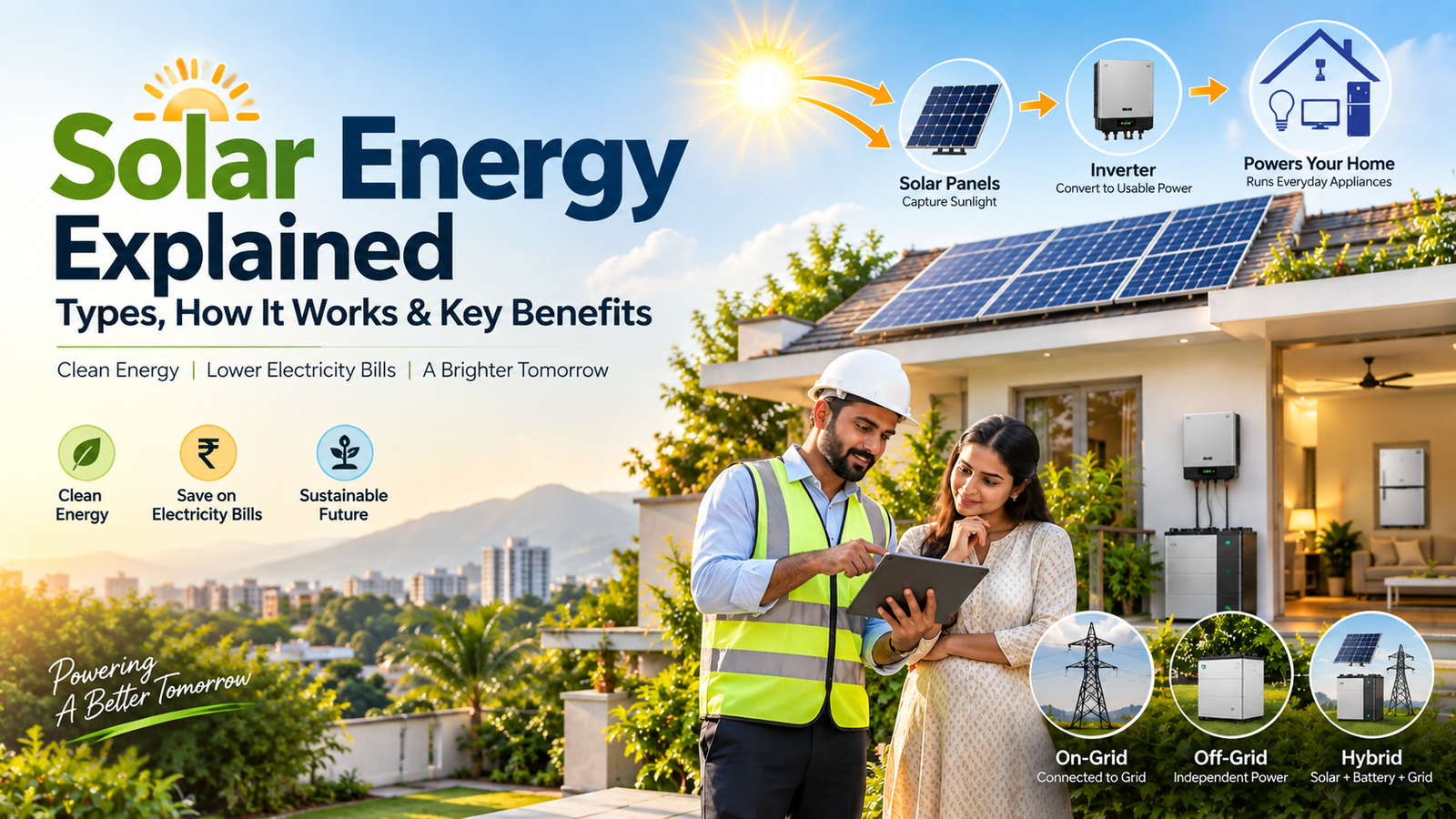
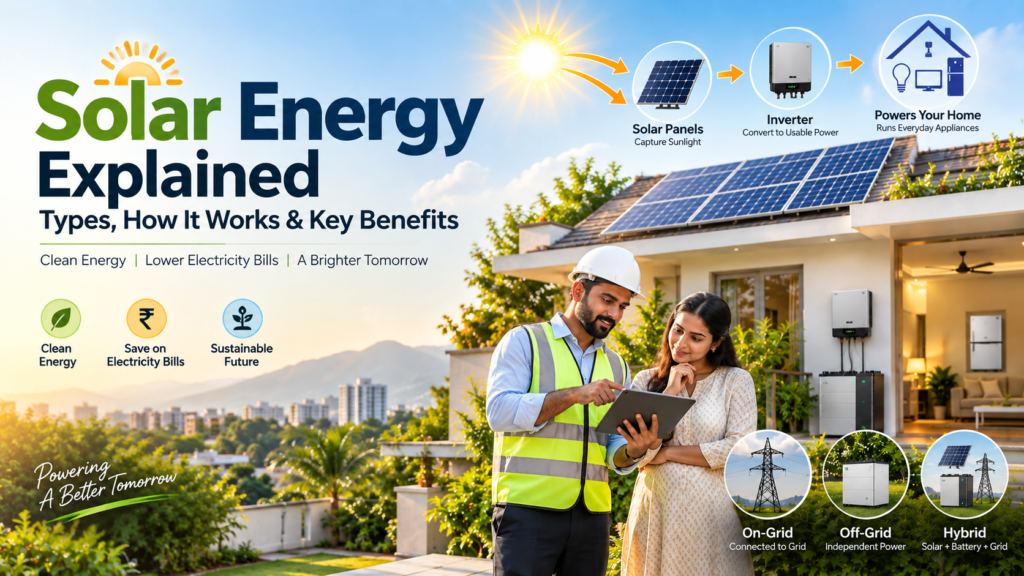
For electricity generation, photovoltaic (PV) technology is the most commonly used solution. Solar cells within a PV panel respond to sunlight and generate direct-current electricity. An inverter then converts that electricity into alternating current, which can be used by most household and commercial electrical equipment.
Solar technology is not limited to electricity generation. Sunlight can also be used for applications such as water heating, industrial heating, cooking, and certain commercial processes.
Since sunlight is naturally replenished, solar power is recognized as a renewable form of energy.
How Does Solar Energy Work?
A typical solar electricity system follows a straightforward process.
1. Sunlight Falls on the Panels
Solar panels are positioned where they can receive sufficient sunlight. When sunlight reaches the photovoltaic cells, the cells begin producing electrical energy in the form of DC electricity.
2. Photovoltaic Cells Produce Electricity
The solar cells contain semiconductor materials that react when exposed to sunlight. This reaction creates an electrical current that can be collected and used by the solar system.
The amount of electricity produced can vary depending on factors such as:
- Solar panel capacity
- Available sunlight
- Panel orientation and tilt
- Shading
- Temperature
- Overall system design
- Panel cleanliness
- Inverter performance
3. The Inverter Converts the Power
Solar panels generate DC electricity, whereas most appliances use AC electricity. The inverter performs the conversion so that the generated power can be used within the property.
Many modern inverters also include monitoring features that allow users to view generation data and identify potential system problems.
4. Solar Electricity Runs Appliances
Once converted into usable AC electricity, solar power can supply common appliances such as lights, fans, refrigerators, televisions, computers, water pumps, and air conditioners.
5. Surplus Electricity May Go to the Grid
With a suitable grid-connected system, electricity that is not immediately consumed can potentially be exported to the utility network through an approved metering arrangement. The applicable process and requirements depend on local regulations and utility rules.
Main Types of Solar Energy Systems
Solar solutions can be categorized according to how they generate, use, store, and distribute energy. For solar electricity, three widely used configurations are on-grid, off-grid, and hybrid systems.
1. On-Grid Solar System
An on-grid solar system operates while connected to the electricity distribution network.
During daylight hours, the solar panels produce electricity that can be used by the property. If generation exceeds immediate consumption, surplus electricity may be sent to the grid under the applicable metering arrangement.
When the solar system is not producing enough electricity, the property can draw power from the grid.
Benefits of On-Grid Solar
- Reduces dependence on purchased grid electricity
- Does not normally require batteries
- Allows surplus generation to be utilized through approved arrangements
- Has a relatively simple system configuration
- Works well for properties with a dependable grid connection
For many residential and commercial properties, an on-grid system can provide a practical way to generate electricity while retaining access to the existing utility network.
2. Off-Grid Solar System
An off-grid solar system operates independently, without relying on the utility grid for electricity.
It normally combines solar panels with batteries and other supporting equipment.
During the day, generated electricity can be used immediately or stored in batteries. The stored energy can then be used when solar production is unavailable or insufficient.
Benefits of Off-Grid Solar
- Can operate without a utility connection
- Suitable for locations with limited grid access
- Provides greater energy independence
- Stored electricity can be used after sunset
However, an off-grid installation requires careful planning. Battery capacity, energy consumption, replacement requirements, and system sizing all need to be considered. solar energy
3. Hybrid Solar System
A hybrid solar system combines solar panels, battery storage, and a grid connection.
Depending on the system configuration, solar electricity can be used directly by appliances, stored in the battery, or supplied to the grid when permitted.
Hybrid systems can be useful for property owners who want solar generation along with energy storage and backup capabilities.
Benefits of Hybrid Solar
- Combines solar generation and battery storage
- Can provide backup power under suitable conditions
- Helps reduce reliance on grid electricity
- Offers flexible energy management
- Can be useful where backup power is a priority
The addition of batteries makes a hybrid system more complex and generally more expensive than a basic grid-connected installation.
Solar Thermal Energy
Solar technology is not only used for producing electricity. Solar thermal systems capture sunlight primarily as heat.
A solar water heater is a common example. Solar collectors absorb energy from the sun and transfer that heat to water, reducing the need for conventional electricity or fuel for water heating. solar energy
Solar thermal technology can be used for:
- Domestic water heating
- Space heating
- Industrial heating
- Solar cooking
- Selected commercial applications
This demonstrates that sunlight can be utilized for both electrical and thermal energy needs.
Key Benefits of Solar Energy
The increasing adoption of solar power across homes, businesses, and industries is driven by several potential benefits.
1. Renewable Source of Energy
Sunlight is naturally replenished, unlike finite fossil fuels. Solar systems offer a renewable solution for producing electricity from sunlight.
During operation, photovoltaic systems do not require conventional fuel combustion to produce electricity.
2. Reduced Dependence on Grid Electricity
A properly designed solar installation can generate electricity directly at the property, reducing the amount of power that needs to be purchased from the grid.
The actual reduction in electricity costs depends on factors such as system capacity, household or business consumption, solar generation, electricity tariffs, and applicable regulations.
3. Potentially Lower Operating Costs
Once a solar system has been installed, sunlight does not have to be purchased as a fuel. This can contribute to relatively low operating costs over the system’s useful life.
However, solar installations still require appropriate monitoring, cleaning, inspections, and occasional replacement of components.
4. Cleaner Electricity Generation
Solar electricity is generated without fuel combustion at the point of generation. Greater use of solar power can therefore help reduce reliance on conventional fossil-fuel-based electricity.
5. Flexible System Sizes
Solar installations can be designed for a wide range of requirements. solar energy
Small systems can serve individual homes, while larger installations can supply offices, factories, institutions, and utility-scale projects. solar energy
6. Effective Use of Rooftop Space
Residential and commercial rooftops can provide valuable space for solar panels.
The layout can be customized according to available roof area, electricity requirements, shading, orientation, structural conditions, and maintenance access.
7. Greater Energy Independence
Producing electricity on-site can reduce reliance on electricity purchased from the grid.
When batteries are incorporated into the system, excess electricity can also be stored for later use. Battery capacity and operating requirements should be evaluated carefully before choosing this configuration.
Factors That Influence Solar Power Generation
Installing solar panels does not guarantee the same amount of electricity generation at every property. Several conditions can influence the system’s output.
Sunlight Availability
Solar panels need sunlight to generate electricity. Locations receiving stronger and more consistent solar radiation generally offer greater generation potential.
Shading
Shadows from trees, nearby buildings, water tanks, parapet walls, antennas, and other rooftop structures can affect solar generation.
A detailed site assessment can help identify potential shading problems before the panel layout is finalized.
Panel Orientation and Tilt
The direction and angle at which panels are installed influence how effectively they receive sunlight during the day.
The appropriate layout should be determined according to the property’s location, roof configuration, and installation conditions.
Temperature
Solar panels are designed for outdoor use, but their electrical output can change with temperature. Proper system design should take local environmental conditions into account.
Dust and Dirt
Accumulated dust and other debris can reduce the amount of sunlight reaching the panel surface. The required cleaning frequency depends on local environmental conditions and the level of soiling.
Quality of System Components
Solar panels, inverters, cables, mounting structures, electrical protection devices, and installation workmanship can all affect system reliability and performance.
Solar Energy for Homes
Residential rooftop solar is one of the most common applications of solar technology.
A suitably designed home solar system can generate electricity for everyday appliances such as:
- Fans
- Lights
- Refrigerators
- Televisions
- Computers
- Washing machines
- Water pumps
- Air conditioners
- Other household equipment
The appropriate solar capacity should be determined by reviewing household electricity consumption and the usable roof area. solar energy
Homeowners should examine recent electricity bills before deciding whether a smaller system, such as 2 kW or 3 kW, or a larger system, such as 5 kW or more, is appropriate.
Solar Energy for Businesses
Commercial properties can also benefit from rooftop solar, particularly when they have significant daytime electricity requirements. solar energy
Solar installations can be considered for:
- Offices
- Retail shops
- Hotels
- Schools
- Hospitals
- Warehouses
- Manufacturing facilities
- Restaurants
- Commercial buildings
Before installation, businesses should evaluate their electricity demand, operating schedule, roof area, load profile, proposed system capacity, and applicable regulations.
Solar Energy and Electricity Bills
Reducing electricity expenses is one of the most common reasons property owners explore solar power.
However, expected savings should not be calculated using system capacity alone. A meaningful assessment should consider several factors, including:
- Annual electricity consumption
- Expected solar generation
- Applicable electricity tariff
- Direct consumption of solar power
- Electricity exported to the grid
- Initial system cost
- Maintenance expenses
- Financing costs
- Applicable incentives
A professional solar assessment based on actual electricity bills and property conditions can provide a more realistic understanding of potential savings.
Is Solar Energy Suitable for Every Property?
Solar power can work for many types of properties, but every site has different installation conditions. solar energy
Before installation, a professional assessment should consider:
- Usable rooftop area
- Structural condition
- Sunlight exposure
- Shading
- Roof orientation
- Electrical infrastructure
- Existing rooftop equipment
- Maintenance access
- Utility requirements
A property with limited or partially shaded roof space may require a different design from a large roof with unobstructed sunlight.
Solar Energy Maintenance
Solar systems are generally designed for relatively low routine maintenance, but regular attention can help maintain reliable operation.
Property owners should monitor solar generation and investigate unexpected changes in system output.
Depending on the surroundings, panels may collect dust, leaves, bird droppings, and other material. Periodic cleaning can help maintain effective sunlight exposure.
Professional inspections can also identify potential problems involving cables, connectors, mounting structures, inverter alerts, and electrical protection equipment.
What to Consider Before Installing Solar Panels
Before purchasing a solar system, property owners should evaluate several important factors.
Understand Your Electricity Usage
Review recent electricity bills to determine how much power your home or business consumes over time.
Check the Available Roof Area
Assess how much usable roof space is available and identify structures or shaded areas that could affect panel placement.
Select an Appropriate System Capacity
Choose the system size according to electricity consumption, roof availability, budget, and expected future energy needs.
Compare Solar Equipment
Review the specifications, efficiency ratings, warranties, and expected performance of the proposed solar panels and inverter.
Check the Installer’s Credentials
Choose an installer that provides clear quotations, appropriate documentation, professional workmanship, and dependable after-sales assistance.
Review the Overall Investment
Look beyond the initial price. Consider applicable incentives, financing, projected savings, maintenance requirements, equipment warranties, and expected long-term performance.
Frequently Asked Questions
What is solar energy?
Solar energy is energy captured from sunlight and converted into useful electricity or heat. Photovoltaic panels can convert sunlight into electricity, while solar thermal systems use sunlight primarily for heating.
What are the main types of solar electricity systems?
The three common configurations are on-grid, off-grid, and hybrid solar systems. Solar thermal technology is another category that primarily uses sunlight to produce heat.
Is solar energy renewable?
Yes. Solar energy is considered renewable because sunlight is naturally replenished.
Can solar panels power an entire home?
A properly sized solar installation can supply a significant share of a home’s electricity requirements and, under suitable conditions, may generate enough energy to cover the home’s consumption over a given period. Actual results depend on electricity usage, system size, sunlight, shading, roof conditions, and whether battery storage is available.
Do solar panels generate electricity during cloudy weather?
Solar panels can continue producing electricity when the sky is cloudy, but their output is generally lower than during periods of strong direct sunlight.
Do solar panels need regular maintenance?
Solar systems require relatively manageable maintenance. Periodic cleaning, performance monitoring, and professional inspections can help keep the installation operating effectively.
What is the expected life of solar panels?
Solar panels are built for long-term use, and manufacturers commonly provide long-duration performance warranties. Actual service life can vary depending on product quality, installation standards, environmental exposure, and maintenance.
Solar power offers a renewable method of producing electricity and heat by utilizing energy from sunlight. Its applications range from residential rooftop installations to large commercial and utility-scale projects.
Understanding the differences between on-grid, off-grid, and hybrid systems can help property owners identify an arrangement suited to their energy requirements. At the same time, roof space, shading, electricity consumption, equipment quality, installation workmanship, and maintenance should all be considered before investing.
The best starting point is to evaluate current electricity consumption and the physical conditions of the property. A properly planned solar installation can make effective use of available sunlight while supporting long-term energy management and the
Leave a comment